

The Tipping Point
You Say You Want a Revolution, but You Probably Don’t

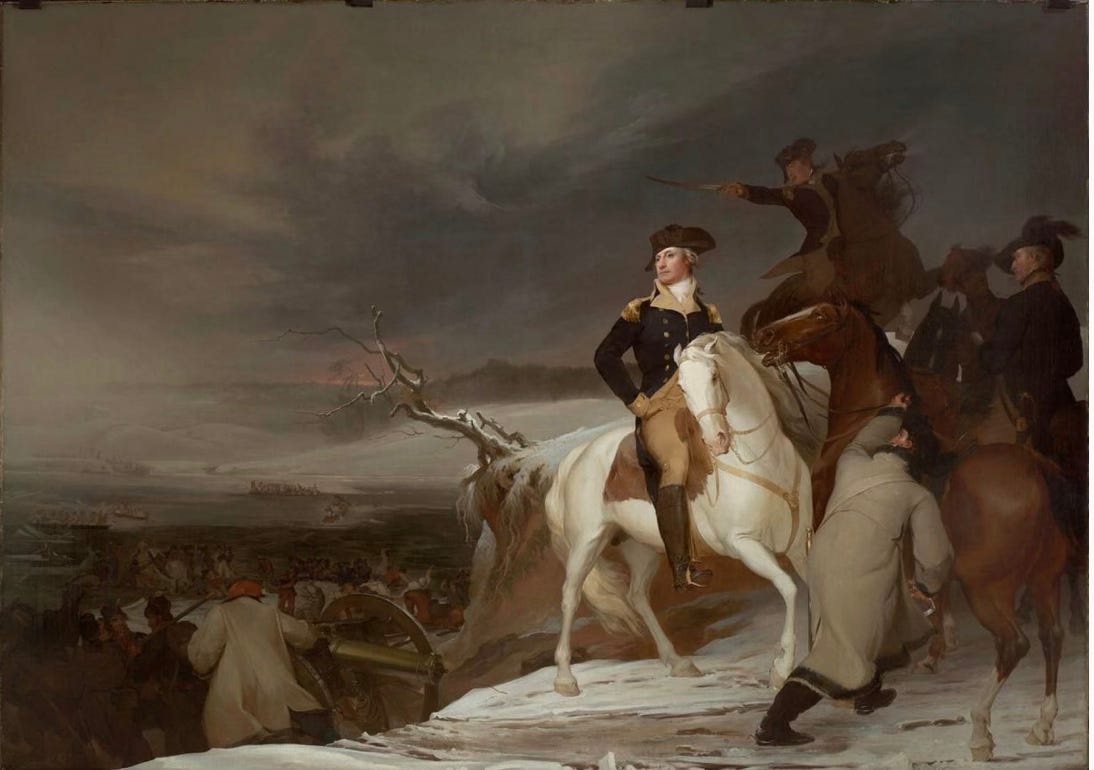
My friend’s voice is tense. I can hear it across the Atlantic. We’ve been talking about the news for almost an hour in the stilted way that’s commonplace now, when you cannot believe the words coming from your own mouth. I’m trying to understand what it’s like for her there now. She is, too.
I always call around the same time, when she’s still on coffee and I’m thinking about dinner. This difference between us in time is nine hours and in space, it’s 2,838 miles, but these yield to another kind of distance, a more profound one. It’s shot through by a hyper-awareness, a keening guilt: I am outside and she is inside. I’ve never called someone in prison, but I imagine it must feel like this.
The rage I am hearing from people at home takes my breath away.
My friend is fighting for calm, even though I know she’s half out her mind with panic. She runs a cafe on the West Coast and her livelihood is vulnerable to the ongoing ICE raids. Her staff is at grave risk and they also happen to be people she cares about. But it’s not just that. It’s the suffocating feeling of entrapment, that the door is barred from the outside and the clock is ticking and no one is coming.
“But ...” she said.
“But?”
“But why is nothing happening?” she said it pleadingly.
“What would work?” I asked. Because I can’t stop thinking about this.
“That is the question.”
No one is doing anything. It’s silent and still and, underneath, seething. I wonder if it feels worse to live inside this, as she does, or to watch it helplessly from afar, as I do. I’ve heard this stillness characterized as a kind of immobilization brought on by fear and helplessness. A public too overwhelmed to resist, because the scope and the speed of the autocratic takeover knocked our legs out from under us. But I don’t think that’s it. Some are resigned, yes, and plenty are in despair. But I think most of us are waiting, because the tipping point will come.
The question wakes me up in the wee hours: “What will it be?” This isn’t to discredit the many successful resistance campaigns across the U.S., including the powerful mass protests and targeted consumer campaigns like Tesla Takedown. I view them with deep respect. But that’s not what I’m talking about. I’m talking about storming the castle.
Not long after Election Day, when I was still reeling, I went to a meeting for lefty Americans overseas. It was sponsored by a political organization and the agenda was to plan campaigns for the year ahead. At the time, sabotage was very much on my mind. I was desperate to take action. I would have gone out and dug a foxhole in the frozen earth if they’d told me to. But that’s not what they wanted. They wanted me to phone bank for the state supreme court election in Wisconsin in the spring. And then for the special elections in Florida’s 1st and New York’s 21st congressional districts.
I was incredulous. Phone banking? In the middle of this? It was like holding a bake sale at the Battle of Stalingrad.
Emile Durkheim, the founding father of sociology, called the emotional mood of a nation the “collective consciousness.” This is comprised of the set of shared beliefs, ideas, attitudes, and knowledge that are common to a social group or society. The mood can flip in an instant, as it did, for instance, after the murder of George Floyd. And when the righteous mobilization of the people hits boiling point and an authoritarian regime cracks and takes flight? That’s called a tipping point revolution and it’s how most of us think political change arrives.
I knew the Wisconsin race was critical, but I didn’t want to chat with folks in the Milwaukee suburbs. I wanted the resistance to dial it up to thermonuclear. I wanted everyone to spill into the streets, ready to fuck shit up. I wanted drums and torches. I wanted a revolution and really, I expected one, because of the way we are, which is heavily armed, short on patience and furious.
I phone banked and the executive orders started rolling out at breakneck speed. All of our symbolic actions looked stupid. Those endless donations bought us nothing. Our passive wait for salvation exhausted us. No court could deliver the justice we sought. Our fantasy of rescue — via policy solutions or tech or good-guy billionaires or, really, anything — died. At the same time, sober voices urged restraint and strategic action, advising that we proceed in a democratic way, when the other side clearly was not. In my dark moments, I thought, “Cui bono?” In my dark moments, I feared that my country is and has always been an entrenched war machine that makes borders, prisons, cops and weapons and that it was going to kill all of us.
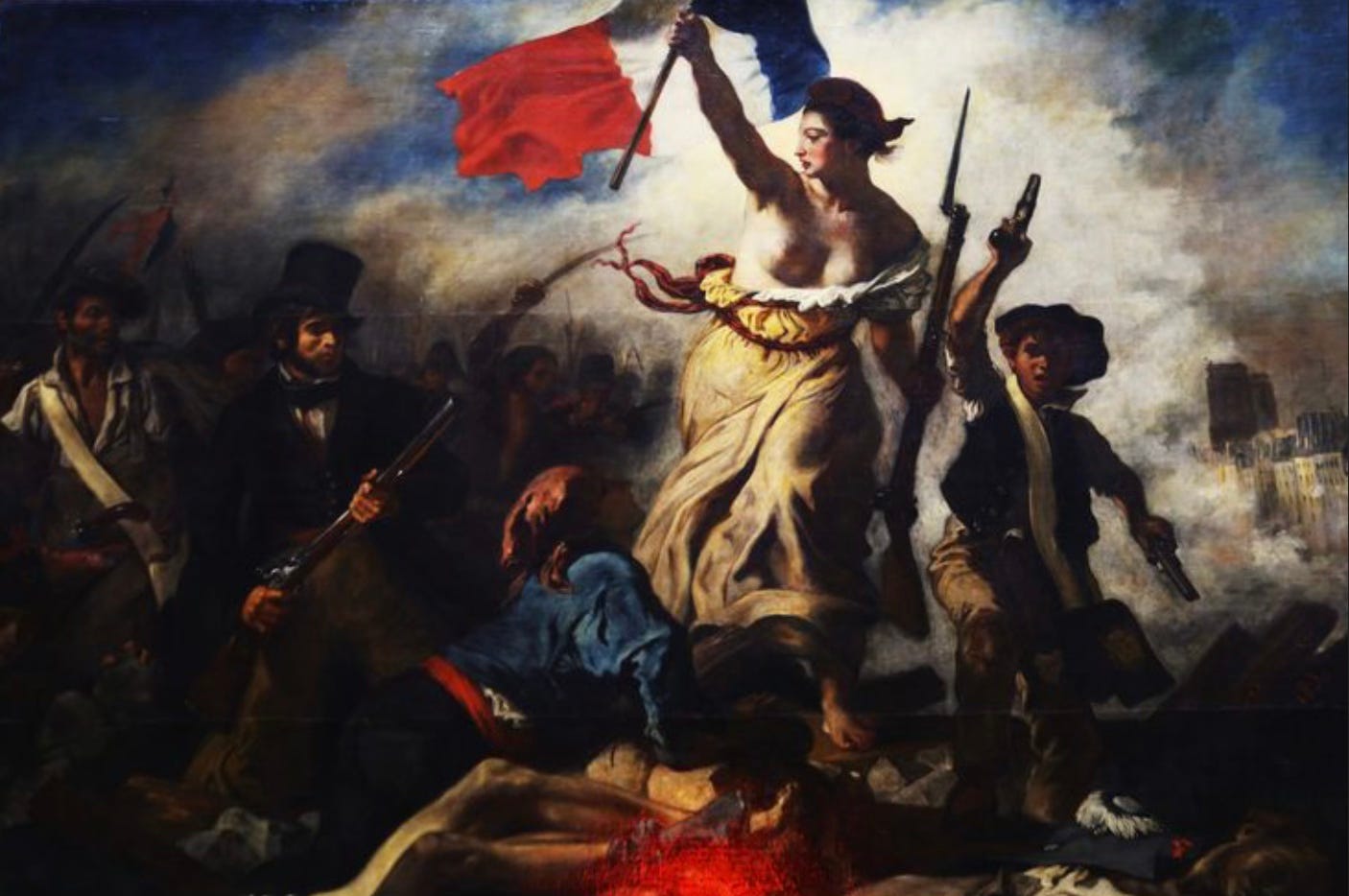
Maybe I’m wrong to wish for that surging crowd of enraged citizens with pitchforks. Not because it wouldn’t be gratifying (it would be so delicious), but because it could fail. The work of unfucking this autocratic takeover may be a longer, slower project than I’d hoped, because tipping point revolutions often don’t tip. They can peter out, leaving behind rival factions locked in internal quarrels, bloody struggle or civil war. They can only skim the surface, unable to achieve deep structural changes, as in the Arab Spring popular uprisings. Or they can fail entirely like the 1989 democracy movement in China.
The kind you want is the kind that deliver major structural changes, like the French Revolution of 1789 or the Russian Revolution of 1917, or the 1989-91 anti-Soviet revolution. As described in the work Theda Skocpol, Jack Goldstone, Charles Tilly and others, these were state breakdown revolutions. They stuck because they transformed deeply entrenched economic, political and cultural institutions.
Since Election Day, I’ve assumed that one day we’d arrive at a flashpoint. I thought we would tip. I’ve been waiting for it, every day, all day. Expat Prep recently compiled a list of red lines that, if crossed, would trigger the writer to exit the U.S. It could be a degradation of posse comitatus, a third Trump term or the cancellation of the 2026 midterms or the 2028 general election. It could be a major war or sustained unemployment. It could be the suspension of the writ of habeas corpus or the implementation of capital controls.
What will it take?
Nothing is happening now, but I refuse to believe that will stay. A revolution is any change in government outside the procedures provided by the regime itself. We may not need it, but just discipline and hard work instead and, perhaps, a spark.
“Notes From Exile is tariff-free.” Epic! 😂
I am amazed at how accurately you capture the mood right now from (X?) miles away. This piece absolutely nails it. Waiting for the spectacular crash and burn, knowing that it seldom happens that way.