

All Saints Day
Will Starving Americans Force a Political and Cultural Reckoning?

I’d been dreading November 1 and now here it was, the day one in eight U.S. residents will lose their food benefits, pawns in a mentally ill budget game that has already cost us a functioning government. I couldn’t help but think of all those people who would now go hungry. I was especially haunted by the kids. Something James Baldwin said kept running though my head: “The children are always ours, every single one of them, all over the globe; and I am beginning to suspect that whoever is incapable of recognizing this may be incapable of morality.”
The history isn’t crystal clear, but it’s thought that in 731 AD, Pope Gregory III designated November 1 as a day of remembrance for saints of the church who had no days of their own. The Church of Sweden fine-tuned the ecclesiastical calendar, so here, All Saints Day falls on the Saturday between October 31 and November 6. It’s a public holiday and most shops keep Sunday hours. This year, it happened to fall on November 1, just as Gregory intended. Even though this is not a particularly religious country, many Swedes pay tribute to their dead on this day. I was grieving a country rather than a person, but I was definitely grieving, so I decide to join them.
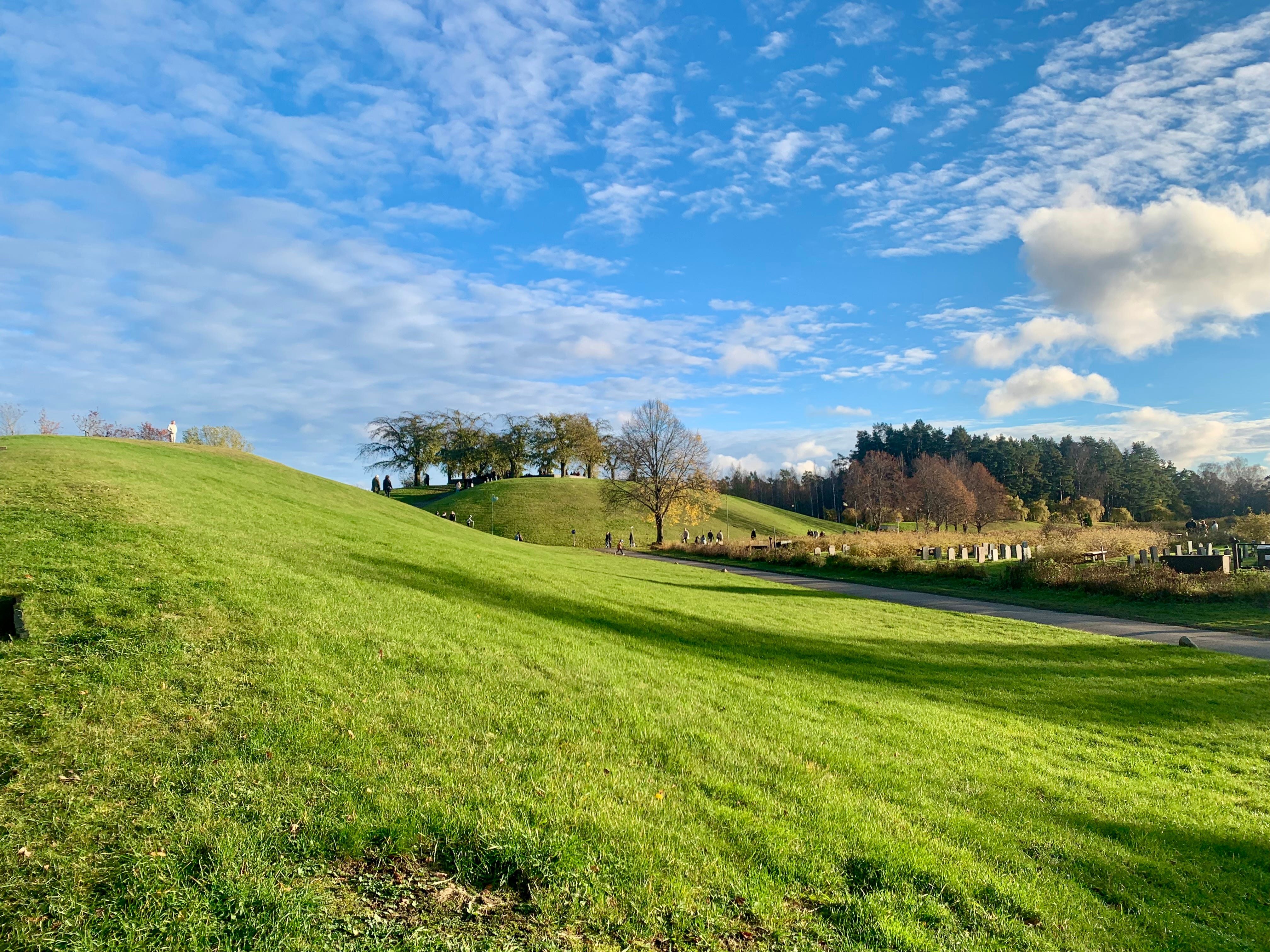
As it turns out, the Woodlands Cemetery, or Skogskyrkogården, is just a few metro stops from my house. It lies outside Stockholm proper on a site that was originally gravel quarries encircled by pine trees. Woodlands was designed by the renowned Swedish architects Gunnar Asplund and Sigurd Lewerentz as a place of both life and death. According the cemetery’s site, the architects’ vision was to “unite the landscape and structures” in such a way as to create “an experience encompassing life and death, hope and sorrow, and light and darkness.”
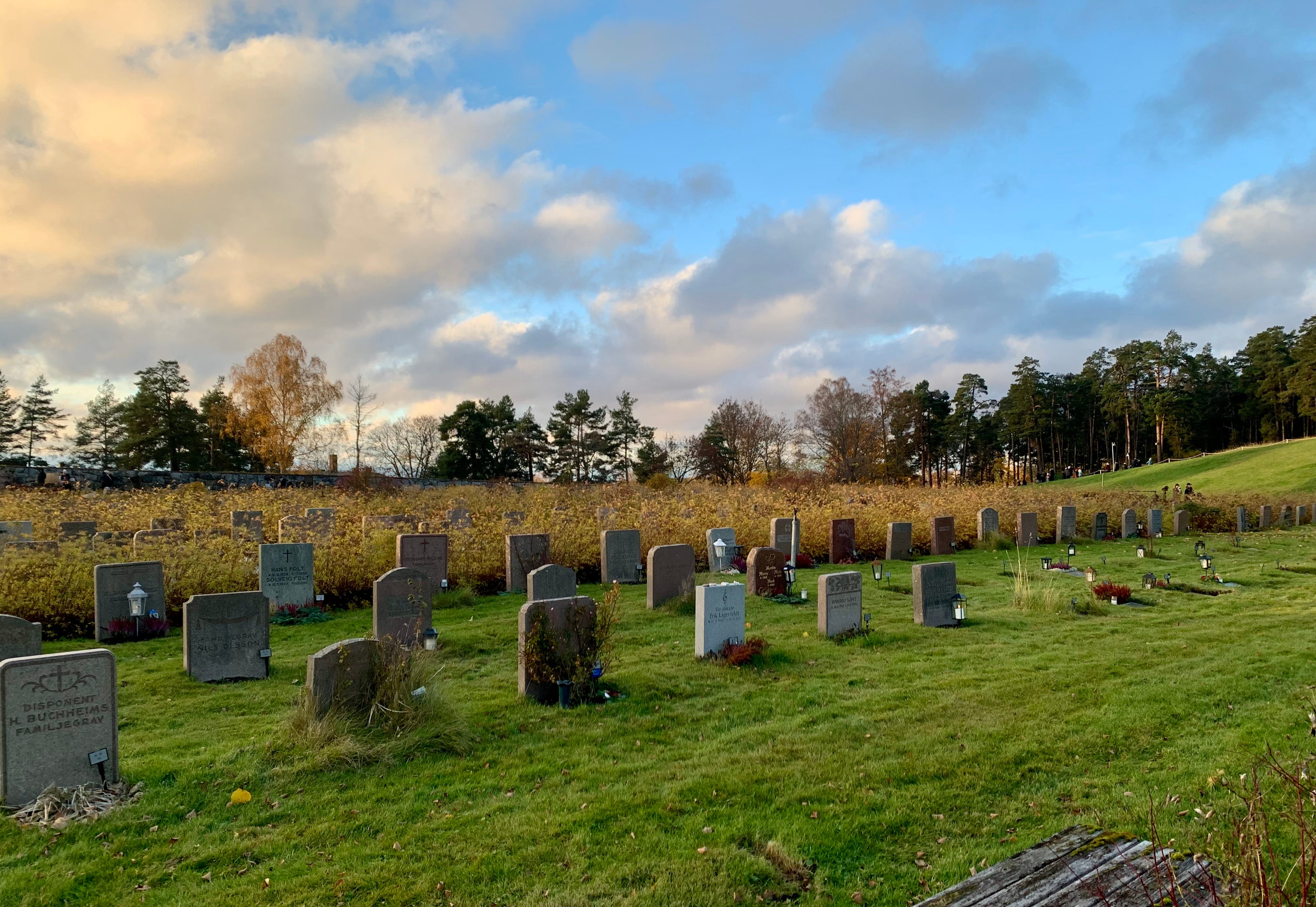
I was skeptical, because this language sounded like every artist’s statement ever written. But the place was miraculous. In fact, UNESCO designated Woodlands as a World Heritage site in 1994, one of only 15 in Sweden. The World Heritage List contains 1,248 properties of outstanding cultural value or natural beauty. UNESCO is committed to protecting and preserving all of them for future generations, because art and culture matter and it ennobles us to touch them.
There are 26 UNESCO sites in the U.S, and also, now, 42 million people whose food benefits have been defunded and who therefore may not eat. Their hunger is deliberately engineered by the regime to create pain among those who were already contending with poverty, injustice and invisibility. In the face of their desperation, the regime is serene. The mothers who will be forced to witness their children’s suffering will lose their minds for grief and rage. No mother can endure this.
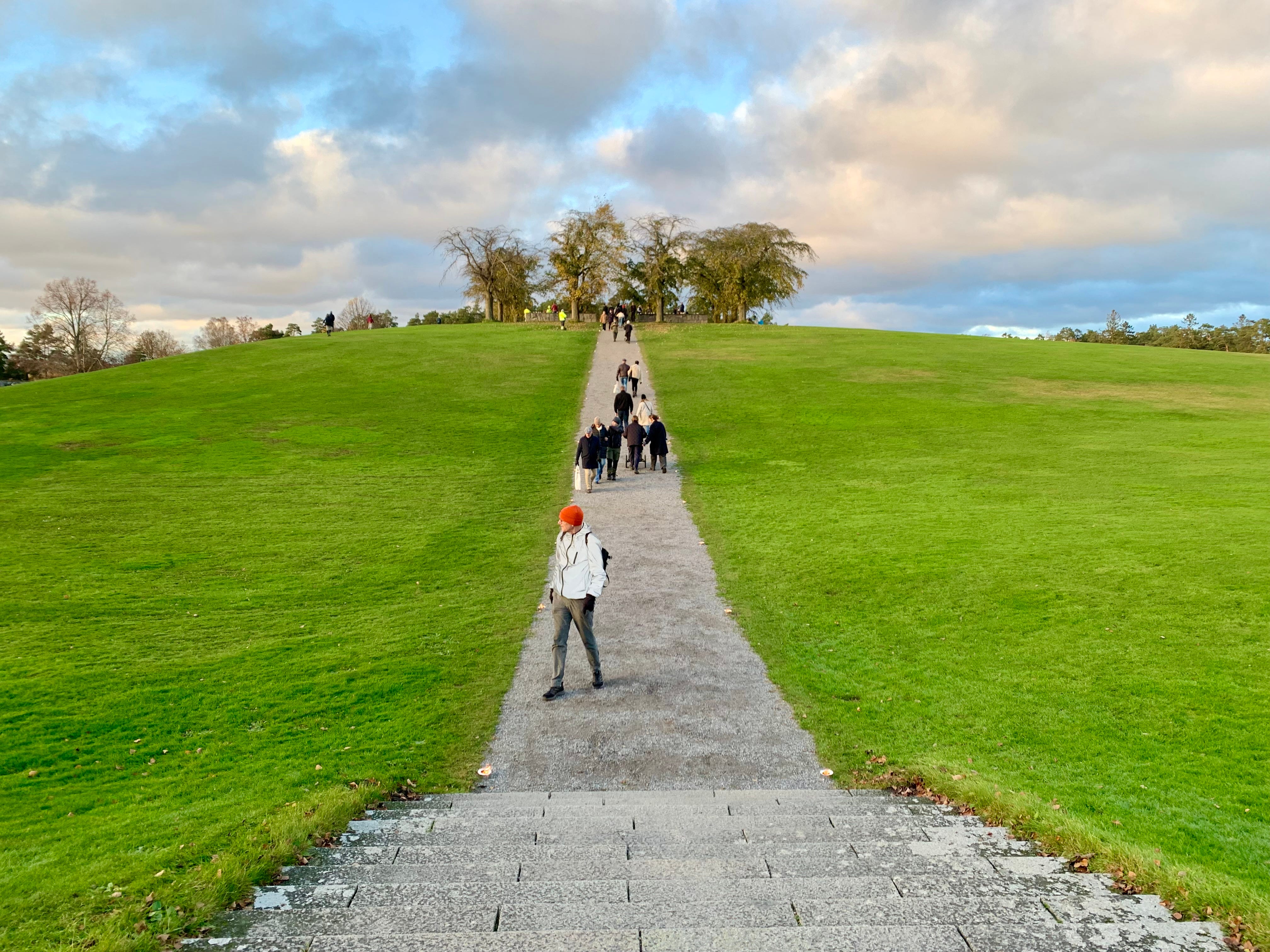
The crowds at Woodlands surprised me. There were so many people that the train station platform was cordoned off into lanes supervised by the police. Once inside the cemetery’s stone walls, a vast green space opened up and I followed the crowd streaming along the path in silence. The mood was somber, but I could feel the sparks of the joy that derive from community: We were doing this together. It was a magical place. Staff set up braziers with fragrant wood fires against the chill. Among the graves, groups of people sat on blankets or stone benches with thermoses of coffee, dogs and babies, communing with the dead in the midst of all this life. In the memorial groves, where the ashes of the cremated are placed without marking, people lit candles and left floral offerings along the path.
In the Catholic tradition, the commemoration of the feast of All Saints focuses on reminders of death and of last things: Death, judgment, heaven and hell. It asks: Since we all must die and are destined to judgment, how then are we to live? I cannot make sense of the sadism of this regime. I cannot fathom that our own government is trying to kill us, beginning with the most vulnerable. But I know this: There will be a counterreaction. This will be answered.
The regime has let its mask slip — maybe too soon — and we can all see everything. The jig is up. We know now that the ideas we believed in are dead. The allegiance that we pledged every day was not to this. The words live in name only now and if we do not fight, we will die. What we are witnessing is depravity. “There’s going to be a enormous political and cultural reckoning in a year or two,” a friend of mine had said the night before. “But it will take years to recover from this.”
Individuals have psyches and so do cities and so do countries and they all work the same way. There can be no wholeness without a reckoning with the darkness inside us, an integration of all of our various parts. Our dark aspects are all too present now, and all too real. “One does not become enlightened by imagining figures of light, but by making the darkness conscious. The most terrifying thing is to accept oneself completely,” as Carl Jung said.
Could this violence mark the beginning of our healing? Will we finally look in the mirror?
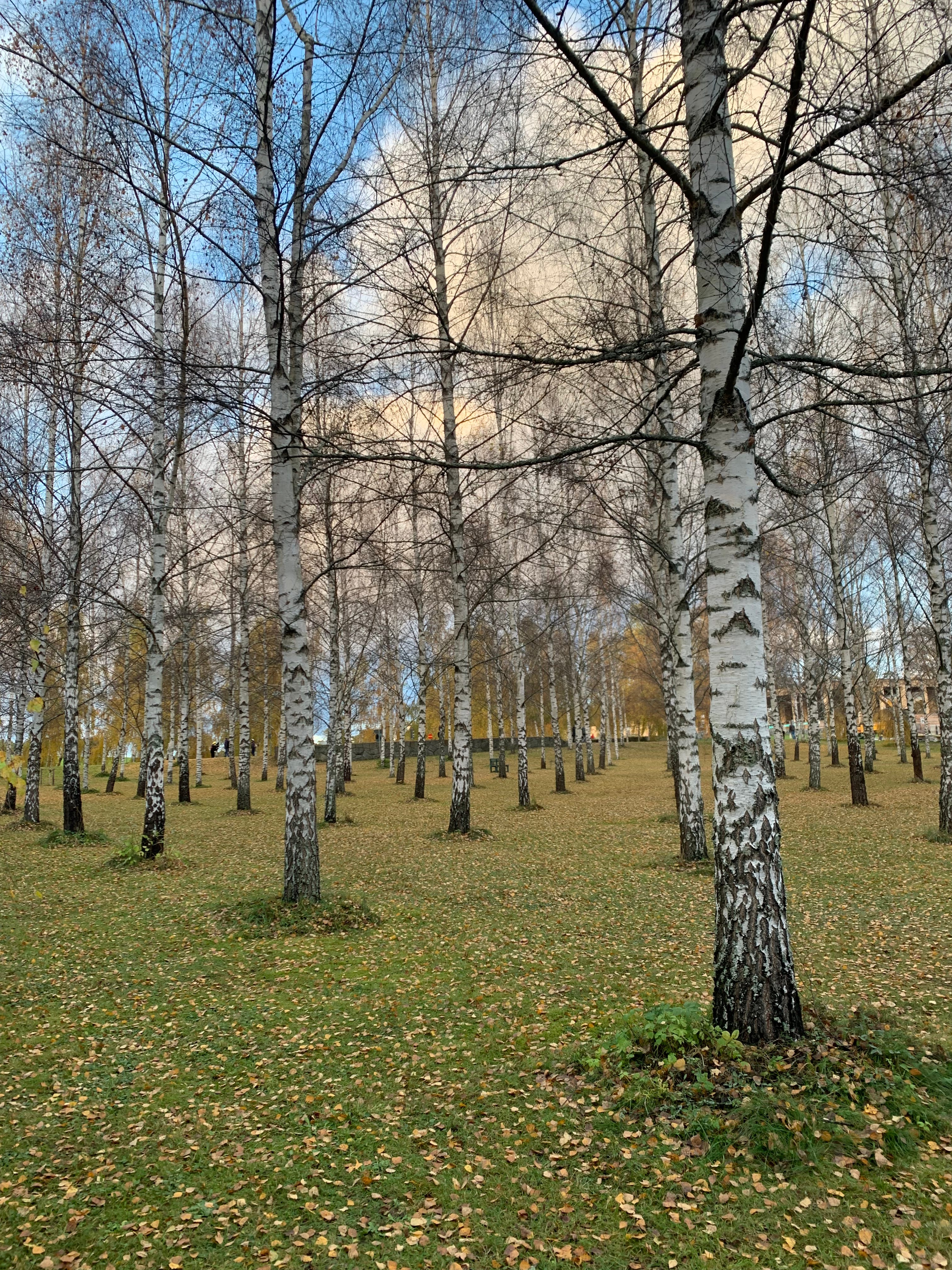
I follow the Path of Seven Wells along its entire course, from Almhöjden, a hilltop meditation grove, to the Chapel of Resurrection. The path was originally a firebreak in the pine forest, but it was widened and lined on one side with birch trees. The seven wells designed to sit alongside it were never built, though. They live on in name only.
After walking for an hour or so, I was getting cold. The dark half of the year is upon us and I could see my breath. I sat at the cafe with my coffee and gingerbread, lost in contemplation of this sacred place. I couldn’t work out what it was about the design that left me so profoundly moved. Then I realized that it wasn’t the built environment or the natural one, either. It was the paths. The problem of grief is that you must keep going, even when you don’t feel you can. But you can, because the path is right there, just beneath your feet.
I had hoped for a counter-reaction by now. Or at least a handful of Republican senators or representatives braving a loss in the next election, or at least in some way demonstrating that their values were not aligned with those of the régime. But it is a country tied into a straight jacket of debt and resentment, fear and anger, privilege and despair, corporations and the human fodder that fuels them. Who dares step from darkness into light when a day of absence from work can mean loss of household or risk loss of employment; who dares true confrontation with menacing masked men when a spark might ignite wholesale and unmitigated destruction?
If one looks to the fringes one sees those who are driven less by greed and hunger for monetary wealth; rather, those whose motivation is bitter, angry, intensifying resentment. Those who openly call for deportation or death, or who embrace real anti-semitism. To them, peaceful responses to what is happening only further stoke the resentment as those actions are seen to speak of privilege: the privilege of not living in fear, and of daring to advocate for those in need. And the fringe will seek to crush that privilege as well.
When April of this year saw an inflection point I began to feel that only a genuinely paralysing national strike could force acquiescence to the rule of law, but who can afford it monetarily, and who among the all-too-comfortable American consumers dares risk the discomfort and inconvenience? No, instead we have a national strike forced upon government workers to protect government "leaders" from a tawdry scandal. We are seeing the inverse of what a strike can be.
And who will look up from their captive "news" broadcasts, tik-toks and podcasts and advertising long enough to actually reflect on how they hold no assured exemption from misery? (This is America, after all.) Instead again we have the inverse of a strike, a hunger strike forced upon the least empowered in society--the denial of food assistance to the elderly, the underemployed, the poor, and their children. It is a hunger strike forced upon more than 10 percent of the population by a heartless culture and its heartless system.
I wish I were more hopeful. But it is difficult to not see each miserable headline as a harbinger of worse to come.
Thank you so much for this. I needed to read this on All Souls Day. As I prayed in church, I thought of my mother and grandmother and her mother and her mother before her. They were English. My dad, a Texan swept her off her feet and brought her to America. But she never changed citizenship to the USA. And thank God. Two days ago I submitted my application for British citizenship after many months of research and gathering of documents. I have become sick at heart to see what America has become. My grown children think I have overreacted, but I know what I see. I don’t know where this path is leading, but I trust I am doing the right thing. And my children will benefit too, with a place, a refuge when things get worse, as i fear they will. So yes, I have many mixed emotions, but it’s good to know that I am not alone in these feelings.